

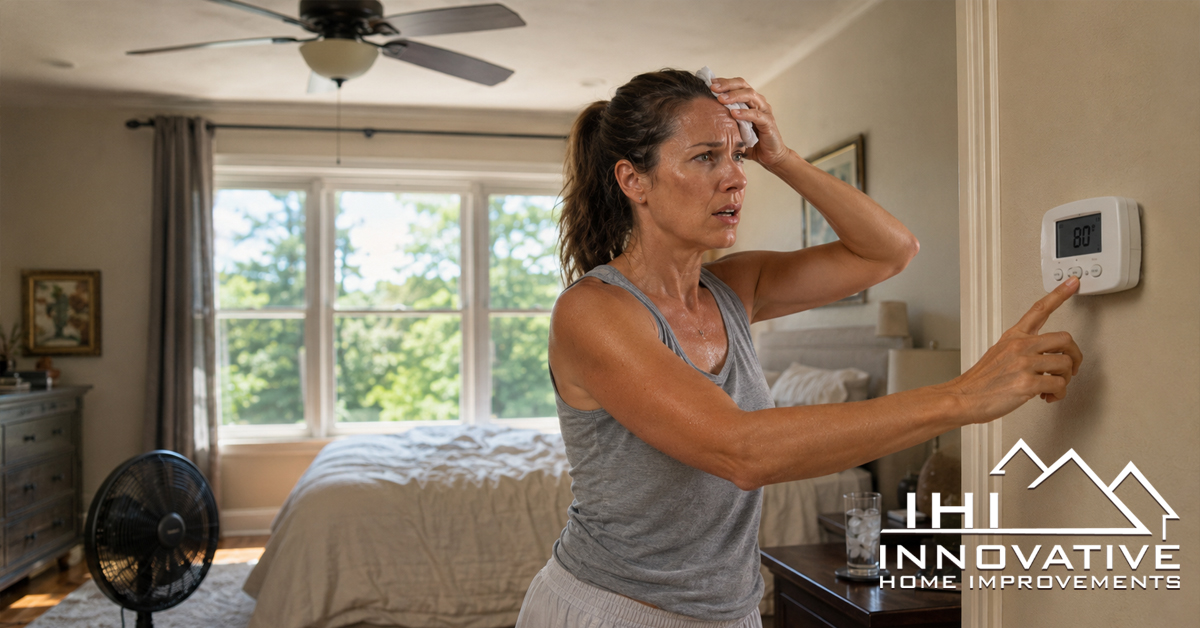
If you keep asking, “Why is my Upstairs So Hot in summer?” Your home may have hidden efficiency problems. Many Maryland homeowners deal with this issue every Summer. The downstairs feels comfortable, but the second floor feels heavy, warm, and uncomfortable. Your air conditioner runs constantly, yet the bedrooms still feel hotter than they should.
At Innovative Home Improvements, we see this problem often. In many homes, old windows, poor attic ventilation, aging siding, and air leaks all work together. Fortunately, the right exterior upgrades can make a major difference.
Why Second Floors Get Hotter
Heat rises naturally inside your home. As warm air moves upward, the second floor collects more heat. During summer, your attic also absorbs intense heat from the sun.
That attic heat radiates downward into upstairs rooms. Bedrooms, hallways, and bathrooms then become harder to cool. Even a strong air conditioner can struggle against that constant heat load.
Several other factors can make the problem worse. Poor insulation, weak ventilation, and aging exterior materials all contribute. Once these issues combine, your upstairs comfort drops quickly.
Old Windows Let Heat Inside
Old windows are one of the biggest causes of upstairs heat. Many older windows allow too much solar heat into the home. Sunlight enters through outdated glass and warms the room quickly.
Basic glass does little to block heat gain. As a result, upstairs rooms facing direct sun become uncomfortable fast. Curtains and blinds may help slightly, but they rarely solve the problem.
Older windows also lose their seal over time. Frames can shift, sashes can loosen, and glass units can fail. These issues allow hot outdoor air to enter your living space.
If your Upstairs So Hot issue feels worse near windows, replacement windows may help significantly.
Air Infiltration Makes Cooling Harder
Air infiltration happens when outside air leaks into your home. In summer, hot and humid air enters through small gaps. Your air conditioner must then work harder to remove heat and moisture.
Worn weather stripping is a major cause of air infiltration. Weather stripping creates a seal between the sash and frame. Over time, that material compresses, cracks, or pulls away.
Once the seal fails, air moves freely through the opening. That is similar to leaving a window slightly open. Even small leaks can create major comfort problems.
Doors can have the same issue. Old thresholds, loose frames, and worn seals allow humid air inside. Together, leaky windows and doors create an uncomfortable upstairs environment.
Low E Glass Helps Control Solar Heat
Modern window glass does much more than older glass. Low E glass uses special coatings to reduce heat transfer. These coatings reflect heat while still allowing natural light inside.
Solar heat gain control matters during Maryland summers. The right glass package blocks unwanted heat from sunlight. It also helps reduce UV exposure that fades furniture and flooring.
With better glass, upstairs rooms stay cooler throughout the day. Your air conditioner also runs less often. That can reduce energy use and improve comfort.
Low E glass works best when paired with tight window construction. Better glass helps, but poor seals still waste energy. That is why both glass quality and air infiltration ratings matter.
Vytex Replacement Windows Can Help
Innovative Home Improvements installs Vytex replacement windows for Central Maryland homeowners. Vytex windows offer strong performance, clean style, and excellent efficiency. They are designed to reduce heat transfer and air infiltration.
Vytex windows include advanced glass options that help block summer heat. Their strong vinyl frames resist warping and help maintain tight seals. Quality weather stripping further limits unwanted air movement.
This combination helps keep conditioned air inside. It also keeps hot, humid air outside where it belongs. Many homeowners notice improved comfort soon after installation.
New windows can also reduce outside noise. That benefit matters during summer, when lawn equipment and neighborhood activity increase.
Roof Ventilation and Attic Heat
Your roof plays a major role in upstairs comfort. During summer, roof surfaces absorb heat for hours. That heat then builds inside the attic.
Without proper ventilation, attic temperatures can rise dramatically. Hot attic air presses down into upstairs rooms. This makes your air conditioner fight heat from above.
Good ventilation allows hot air to escape. Intake and exhaust vents help create steady airflow. That movement reduces attic temperatures and protects roofing materials.
Poor attic ventilation can also shorten roof life. Excessive heat can dry shingles and weaken the roof system. Addressing ventilation improves comfort and protects your investment.
Owens Corning Roofing Improves Protection
Innovative Home Improvements uses Owens Corning shingles for roof replacement. These shingles provide durable protection and strong performance. They also work with proper ventilation systems to improve overall home efficiency.
A new roof can help reduce heat problems when old materials fail. Damaged shingles, worn underlayment, and poor ventilation allow heat and moisture issues. Replacing an aging roof helps restore the home’s protective barrier.
Owens Corning roofing systems also offer attractive shingle options. You can improve curb appeal while strengthening your home against Maryland weather. Better roofing protection supports better comfort inside.
If your upstairs heat problem comes with an aging roof, an inspection makes sense.
Old Siding Can Transfer Heat
Siding also affects upstairs comfort. Old or damaged siding can allow heat to transfer through exterior walls. Cracked panels, gaps, and loose sections reduce your home’s efficiency.
Hot outdoor air can enter wall cavities through failing siding. Once inside, that heat affects rooms along exterior walls. Upstairs bedrooms often feel this problem most.
Insulated siding can help reduce heat transfer. It adds another layer of protection around the home. This improves comfort during summer and winter.
New vinyl siding also protects against moisture, insects, and hidden wall damage. When siding works properly, your home feels more stable and efficient.
Signs Your Home Needs an Inspection
Some upstairs heat problems come from normal summer conditions. Others point to failing exterior components. A professional inspection helps identify the real cause.
Call Innovative Home Improvements if upstairs rooms stay hot all day. Notice whether certain windows feel warm or drafty. Also check for foggy glass, damaged siding, or roof wear.
High energy bills are another warning sign. Your cooling system should not run constantly without improving comfort. Persistent humidity upstairs may also indicate air leaks.
If your Upstairs So Hot concern keeps returning, guessing rarely helps. A professional assessment gives you clear answers.
Why Professional Guidance Matters
Every home is different. Some houses need new windows. Others need improved siding, roof ventilation, or exterior doors.
A professional can evaluate the full home envelope. That means looking at how windows, siding, doors, and roofing work together. This approach finds problems that single product fixes may miss.
Innovative Home Improvements explains options clearly. We help you prioritize improvements based on comfort, budget, and long-term value. You get honest recommendations without unnecessary pressure.
Comfort and Savings Work Together
Keeping your upstairs cooler improves daily life. Bedrooms become more comfortable at night. Home offices feel easier to use during hot afternoons.
Energy savings may follow as well. When exterior materials perform better, your cooling system works less. Less strain can also help extend equipment life.
Over time, these improvements add value. A more efficient home feels better and costs less to maintain.
Is Your Upstairs To Hot This Summer?
If your Upstairs So Hot problem returns every summer, your home may need exterior improvements. Old windows, worn weather stripping, poor roof ventilation, and failing siding all contribute. Together, they allow heat and humidity to overwhelm your second floor.
Vytex replacement windows can reduce air infiltration and solar heat gain. Owens Corning roofing can improve protection and support better attic ventilation. Updated siding and doors can also strengthen your home’s energy performance.
Innovative Home Improvements has served Central Maryland homeowners since 1986. Our family owned, MHIC-licensed team replaces windows, doors, siding, and roofs with care. Contact us today for an inspection and a clear plan for a cooler, more comfortable home.


